Banana Link Was 20 Years Old in 2016
Over the two decades we have made a significant contribution to making tropical fruit export production more ethical and sustainable. To mark the occasion of our twentieth anniversary, we celebrated our most significant 20 achievements:
20
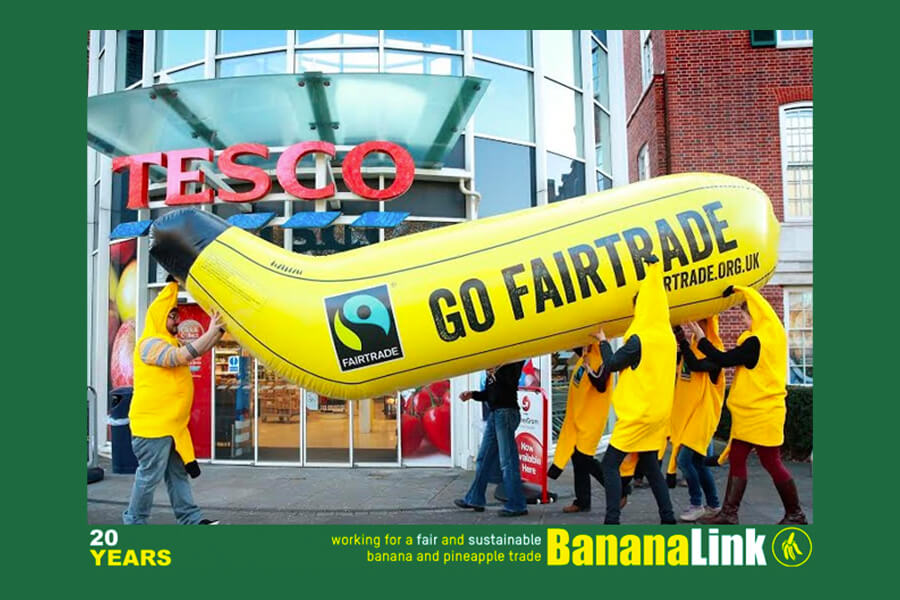
Tesco Commits to Costs of Sustainable Production
In 2014, following pressure from campaign groups, including Banana Link, Tesco made a commitment to pay a price for its bananas that covers the Costs of Sustainable Production for their bananas, using the Fairtrade Minimum price as a guide.
Tesco will also, by 2017, ensure that living wages are paid along all of its dedicated supply chains.
Read: Trading Responsibly – Improving the Way We Serve Our Customers and Work with Our Suppliers (Tesco)
19
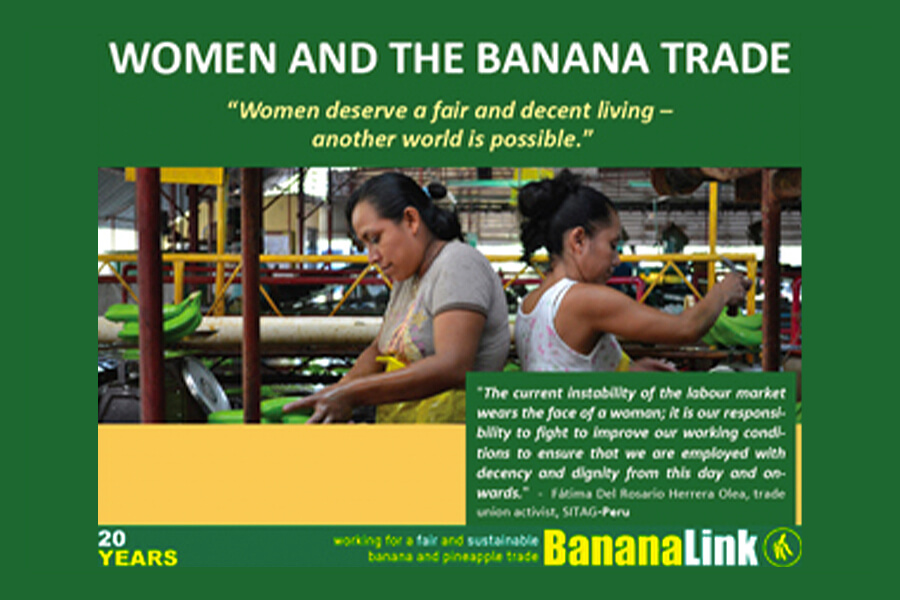
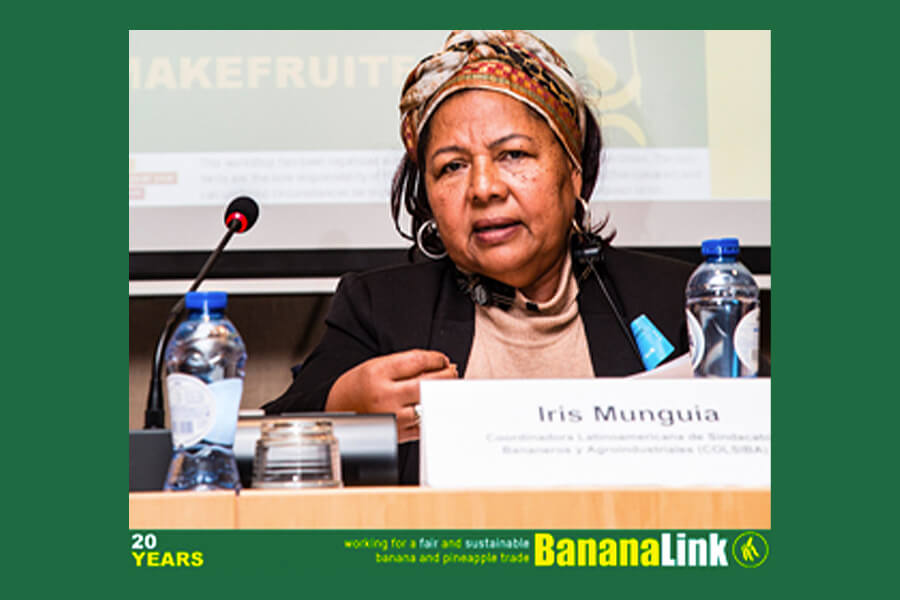
Promoting Gender Equality
Between 7% and 30% of the workforce in Latin American banana production, for example, are women, who are increasingly struggling against instability, inequality and discrimination in the workplace.
Banana Link has always strived to promote gender equality in the banana trade, and has in recent years coordinated two global meetings of women leaders to develop strategies to increase and improve women’s economic engagement in the banana industry.
Watch: Justice for Women – an Interview with Latin American Trade Union Leader Iris Munguia
18
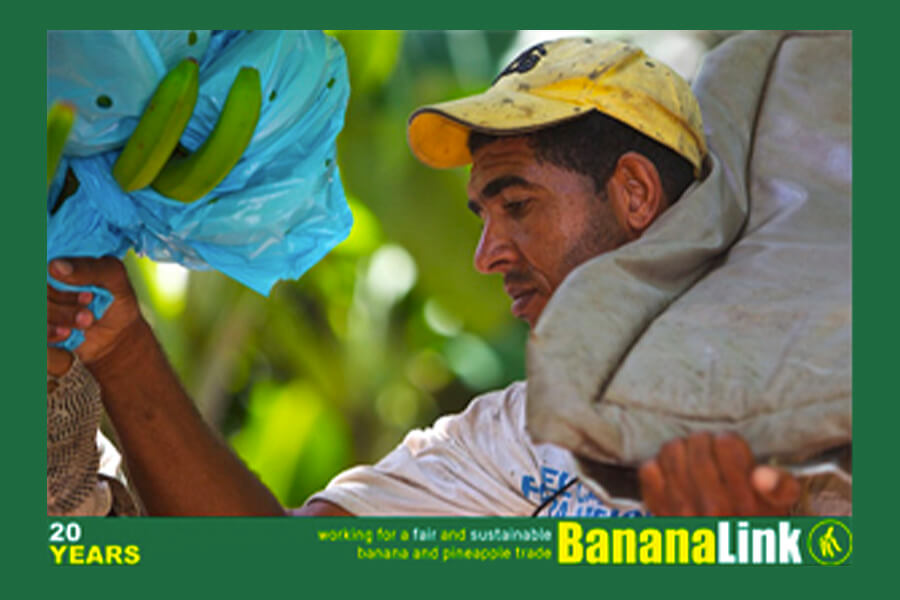
Strengthening Fairtrade Standards for Workers
In 2014, Fairtrade International published its new Standard for Hired Labour, which guarantees the right of workers to freely organise and collectively bargain, and gives workers more control over how to spend the Fairtrade premium.
Fairtrade International also introduced a new methodology to set living wage benchmarks and a clear process for plantations to progress towards a living wage.
“Banana Link welcomes the inclusion of a Freedom of Association Protocol and a Right to Organise Guarantee, among other new elements, which strengthen Fairtrade’s standards for hired labour. Banana Link and our partners are pleased to have played a role in this process through our membership of the Workers’ Rights Advisory Committee (WRAC) of Fairtrade International. The new standard means that trade unions are now recognised as the best vehicle to empowering workers in the exercise of their rights.”
Alistair Smith, Banana Link International Coordinator
17
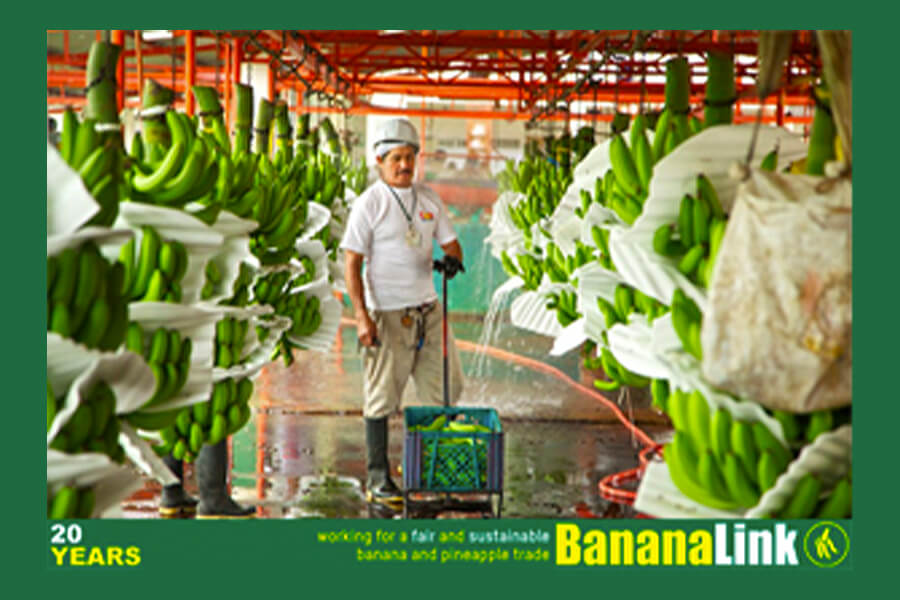
Living Wages in Ecuador
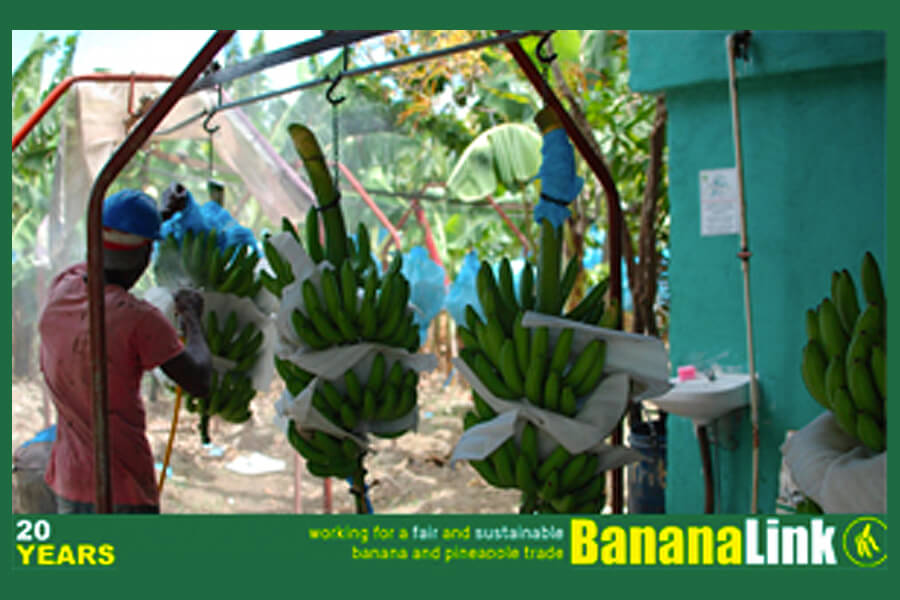
In 2015, the government of Ecuador achieved its aim of raising wage levels within the country to that of a living wage. ensuring the average household could purchase a basket of household goods and services used as a measure for a living wage.
This was the culmination of an 8 year policy to gradually raise the legal minimum wage to the level of a livng wage. With Ecuadorian banana exports hitting record levels in recent years, and the country having one of the lowest unemployment levels in the Americas, Ecuadorian bananas are no longer the fruit of poverty wages, as was undeniably the case at the turn of the 21st century.
Read: Steps Towards a Living Wage in Global Supply Chains (Oxfam UK)
Watch: Ecuador Raises Minimum Wage to Region’s Highest (teleSUR)
16
Regularisation of Haitian Migrant Workers in The Dominican Republic
For decades, Haitian migrant workers have had no protection from the law, and have suffered discrimination and harassment in the Dominican Republic’s banana trade.
Banana Link, along with the Fairtrade Foundation, has played a key role in convincing the government to set up a regularisation programme for Haitian migrant workers enabling them to work legally and secure their rights.
It is estimated that around three quarters of the migrant workforce now have legal status.
“This means a considerable and positive change to our lives. Before we had the [identity] cards, a return journey home could cost us up to $80 (£52). Now, we won’t have to pay cross border feeds, which means the journey will only cost us $10 (£6.50)”
– Jean Francois
Haitian migrant worker
Read: Migrant Workers to Have Legal Status on Dominican Republic Banana Farms (Guardian)
Photo: Fairtrade Foundation
15
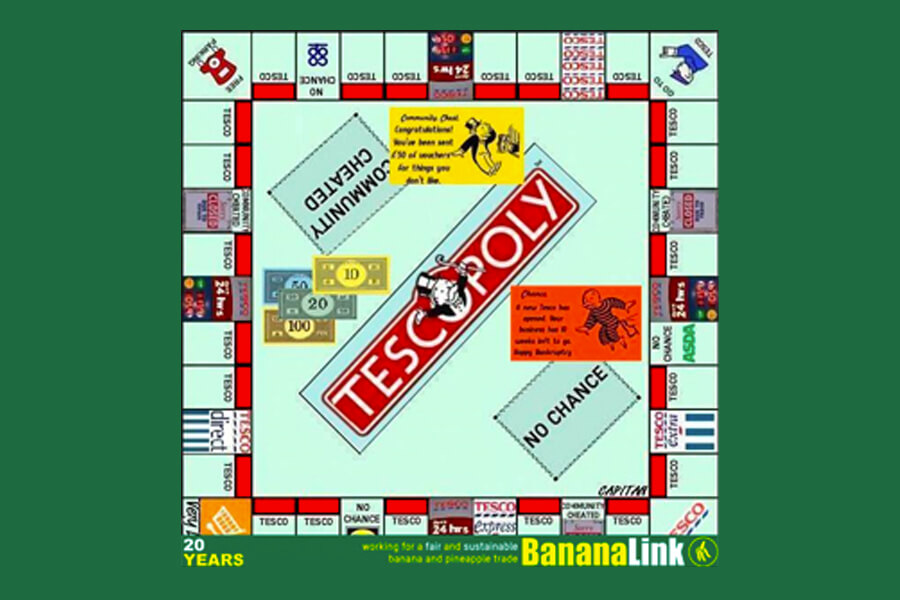
Tescopoly Campaign
In 2005, Banana Link cofounded the Tescopoly campaign, calling for a curbing of supermarket power. Tescopoly has successfully lobbied for the creation of a Groceries Code of Conduct and an Adjudicator to enforce the Code in the UK. Campaigning work continues to extend the remit of the Code and powers of the Adjudicator to cover the whole of supermarket value chains.
“Tesco has a lot of power and they msut use it positively… I am telling you that people are going to bed hungry and conditions are terrible.”
– Fatima Shobodien
Women on Farms
Read: www.tescopoly.org.uk
14
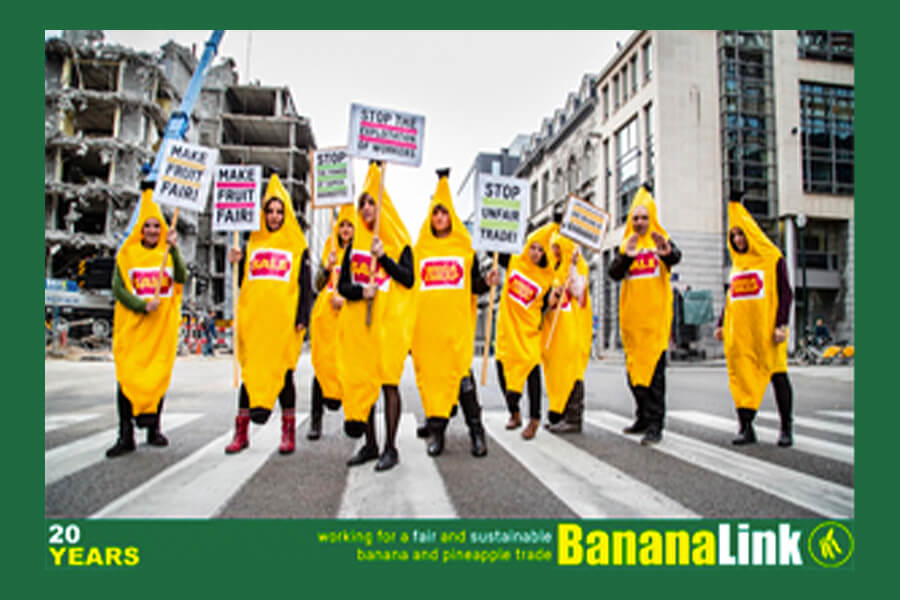
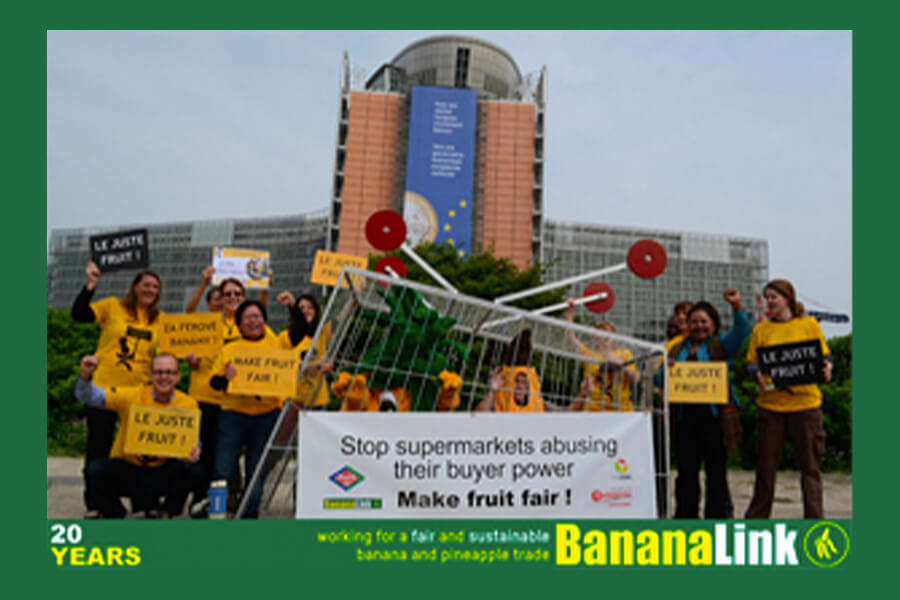
Europe Wide Make Fruit Fair! Campaign
Our Make Fruit Fair! campaign is now active in 19 European countries, in partnership with small-scale farmer and plantation worker unions across Latin America, Africa and the Caribbean.
From Latvia to Portugal, the awareness of millions of consumers is being raised to encourage action to improve working and living conditions in tropical fruit industries.
13
Lobbying on Regulation of Supermarket Buyer Power
12
Critical Approaches to Creating Responsible Global Value Chains
11
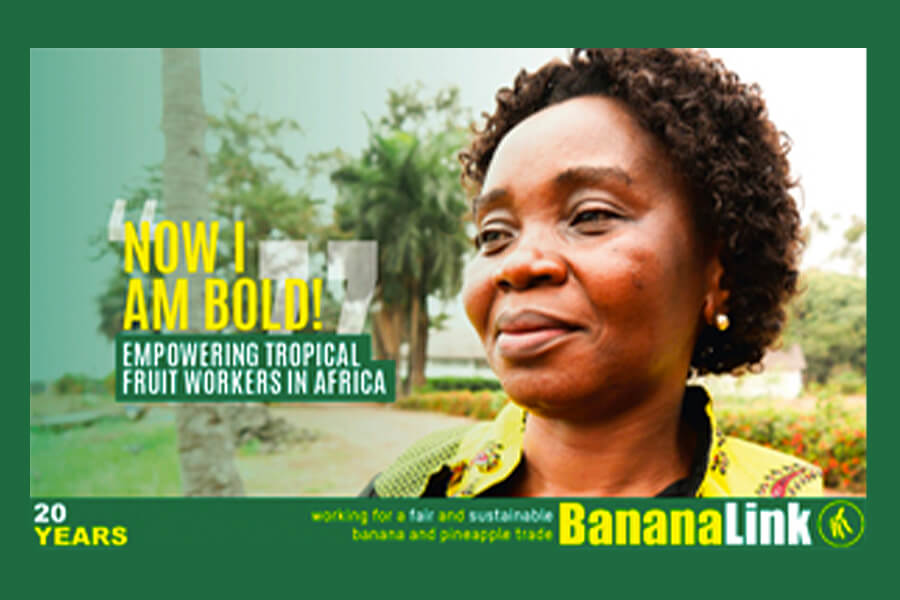
Empowering Workers in West Africa
10
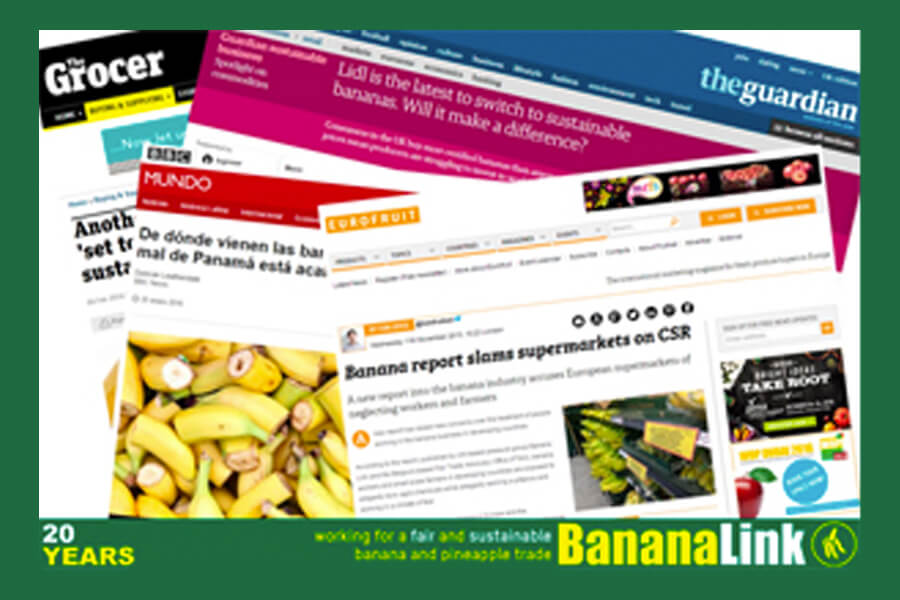
A “Go-To” Authority on The Banana Trade
May/June 2017
9
Survival for Caribbean Windward Islands Farmers
8
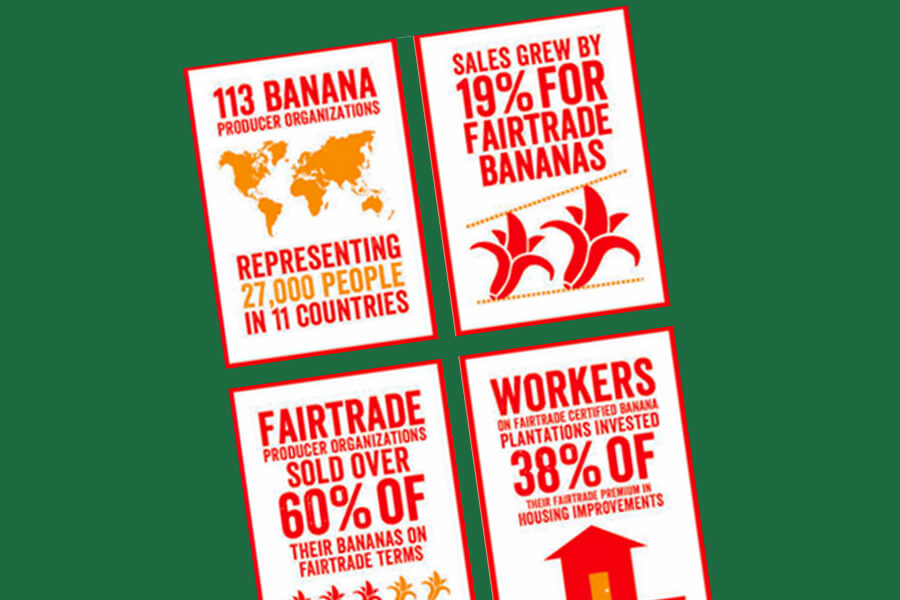
The Growth of Fairtrade Bananas
7
Negotiation of Agreements Protecting Thousands of Workers
6
Only Fairtrade Bananas in Sainsbury, the Co-Operative and Waitrose
Banana & Citrus Fruit Buyer
Sainsbury’s
5
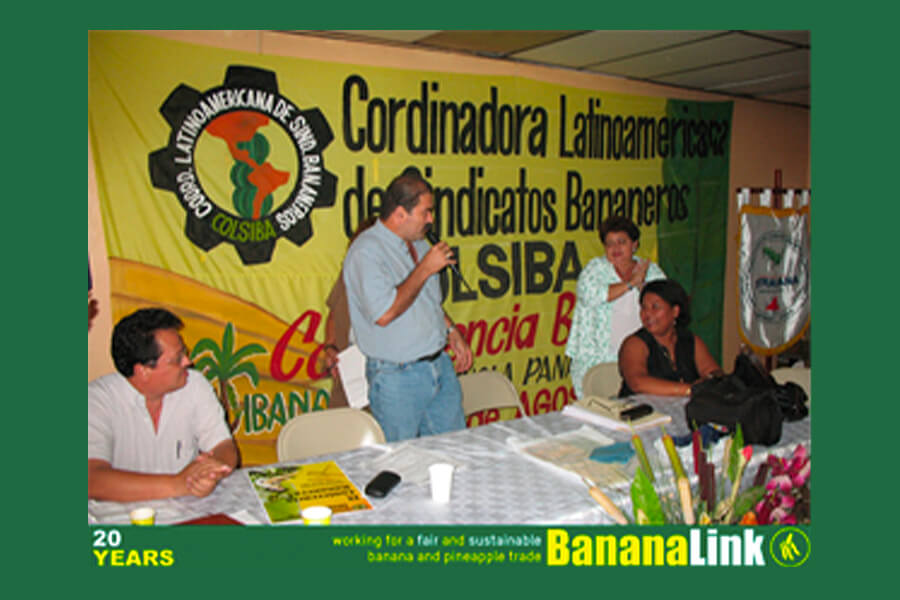
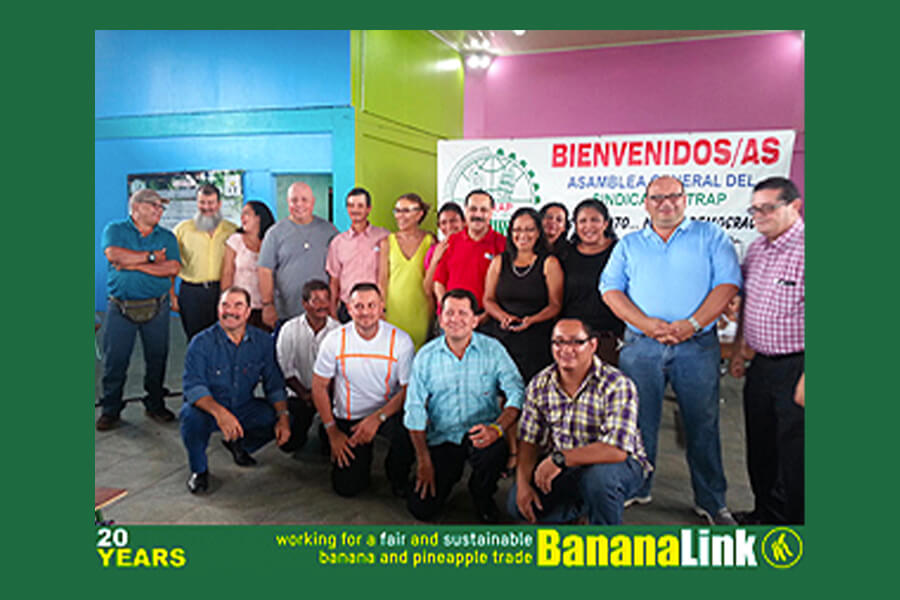
Giving a Voice to Latin American Banana Workers
4
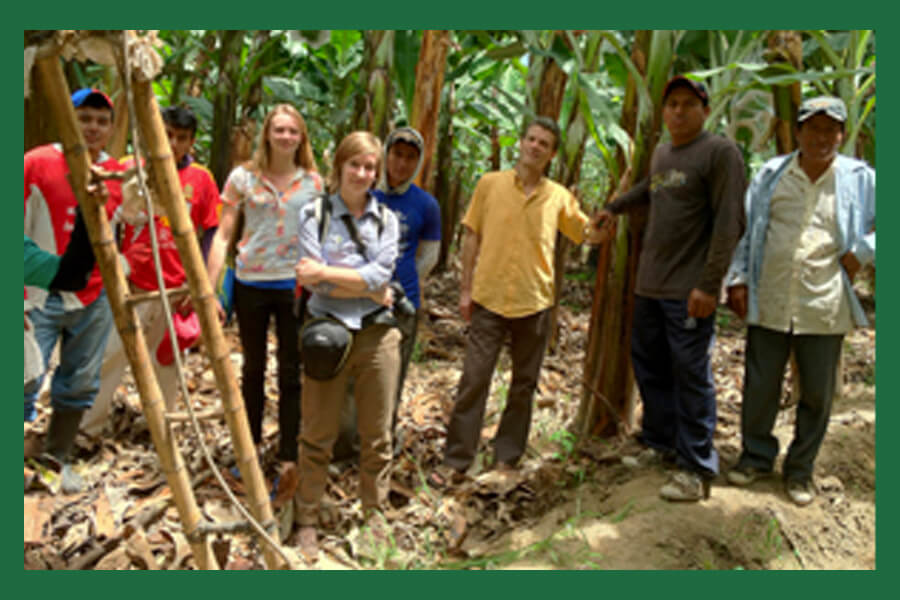
Building Links Between Unions North and South
3
Bringing Together the World Banana Forum
2
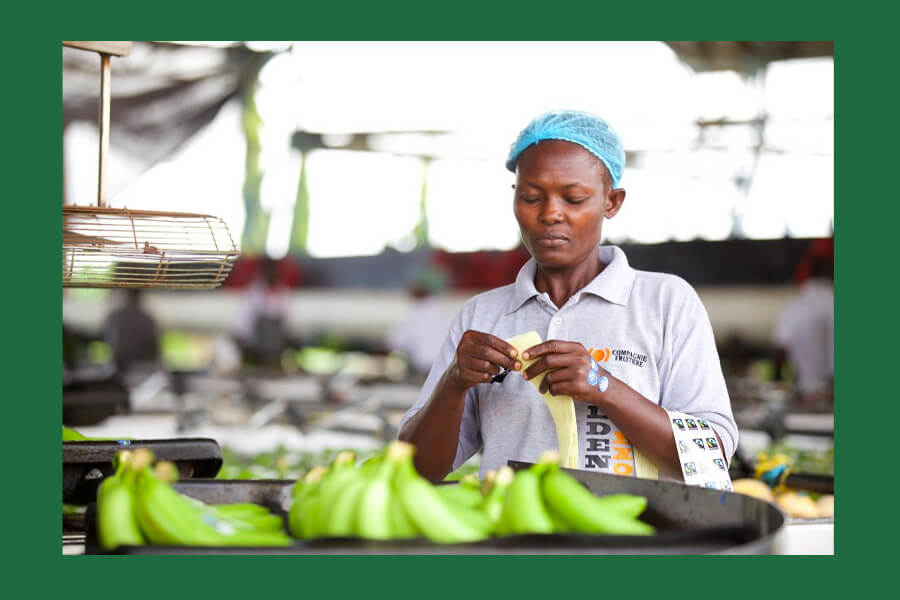
Strong Union Organisation of Banana Workers
1